by Brittany Reese
On top of Petit Jean Mountain, where bluffs catch the morning light and wind moves through pine trees like an ongoing conversation, community isn’t an abstract idea.
It’s lived, personal, and woven into daily routines. For more than 25 years, one organization has quietly sustained that sense of belonging: the Petit Jean Mountain Community Association (PJMCA).
At its core, PJMCA exists to connect neighbors to information, to one another, and to the shared needs of the mountain. More than anything, it reflects a cultural tradition of showing up and staying involved.
As former PJMCA president and longtime resident David Norman observed, “The DNA of this place [the Institute] is very, very heavily embedded in civic engagement and civil society.”


His perspective is shaped by years of work on the mountain at Winrock Farms and later with Winrock International, carrying forward a civic legacy associated with Governor Winthrop Rockefeller well beyond his time in office.
That sense of shared responsibility runs deep. William Henry Jones, a great‑grandson of one of the German Lutheran settlers who arrived on the mountain in 1884, noted that “community engagement really follows the people here.” On Petit Jean Mountain, participation grows naturally from relationships rather than rules.
A Mountain Community Comes Together
Residents came together for facilitated conversations led by the Petit Jean Extension Homemakers, driven by a simple and urgent purpose: to improve communication, address shared problems, and create a space where every voice mattered.
“That emphasis wasn’t accidental,” Norman explained. “There had to be civic engagement from the people that lived there to be able to make the choices about what was important to them.” By May 1998, those conversations shaped an organization grounded in transparency, inclusion, and practical collaboration.
Practical Work, Open Doors


Early challenges were tangible: strengthening fire protection, securing a public water system, and coordinating with Conway County, Petit Jean State Park, and, later, the Institute.
Just as vital was keeping residents informed, a need that gave rise to The Petit Jean Mountain‑aire, the quarterly newsletter that became the community’s connective thread under longtime editors Dr. Ted Hutchcroft and his wife, Bev.
PJMCA remains intentionally simple. There are no dues. Membership is automatic. Meetings are open, votes are conducted by raised hands, and conversations often extend well beyond adjournment, explained David Cox, PJMCA president.
That openness has sustained participation across decades. As Jones noted after retiring to the mountain, involvement felt inevitable: “It’s just the right thing to do.”
Turning Engagement Into Action

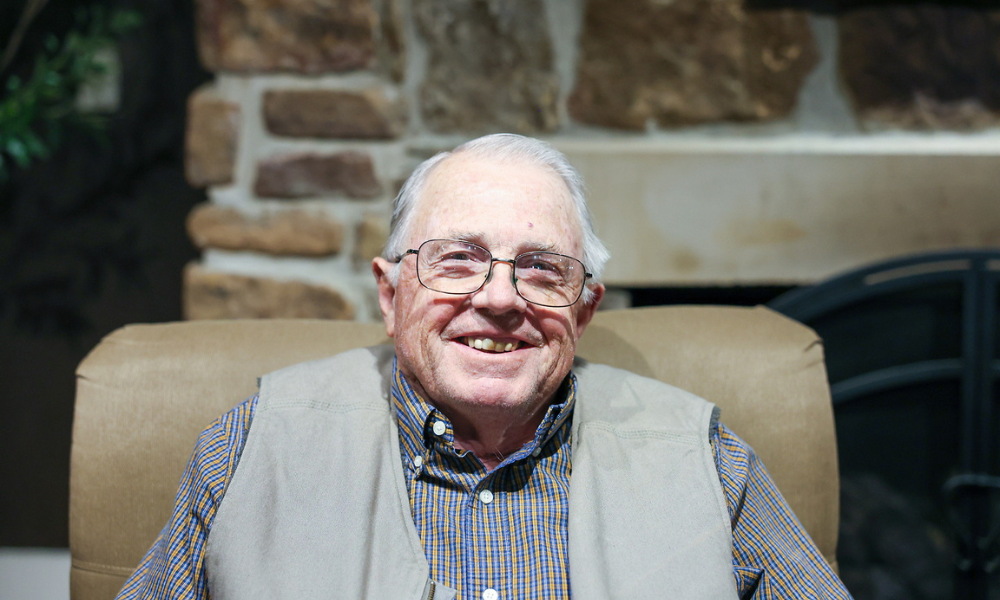
Though the community is small, the depth of experience among mountain residents runs deep. Retired professionals, educators, conservationists, and public servants lend their lived knowledge to conversations that don’t stay theoretical for long.
Through PJMCA, that shared expertise has become practical progress — supporting fire protection upgrades, the long push for public water, infrastructure efforts, state park planning, and beloved traditions like the August pool party and Memorial Day gatherings.
Volunteerism remains central. When the Winthrop Rockefeller Institute was announced in 2005, former executive director and past association president David G. Davies recalled asking for help: “We had 21 [people] sign up that day.”
A Living Model of Civic Life


Quarterly meetings still draw a steady flow of residents. They are nonpartisan by design and neighborly by nature. Disagreements occur, but so do shared meals, laughter, and lasting relationships.
What PJMCA has built over a quarter century is increasingly rare: a sustainable, welcoming model of rural civic life. It works because it grew organically from the people themselves.
As Norman reflected, “It has to start with the community.” And as long as neighbors keep showing up, the association will remain the civic backbone of Petit Jean Mountain.
I still miss the gardening workshops y’all started out with years ago and the cooking classes, they were fun, now all you have are the civics things, which are important I know but not for me as I am not a smart person….but I still have memories of fun times, at Winrock, as I still think of it.
Just keep on keeping on, and tell everyone what’s what, we need that now more than ever.