by Brittany Reese
A Divided Community, A Shared Challenge
The dicamba controversy in Arkansas highlighted how tough agricultural challenges can compel states to strike a balance between regulation, science, and public trust.
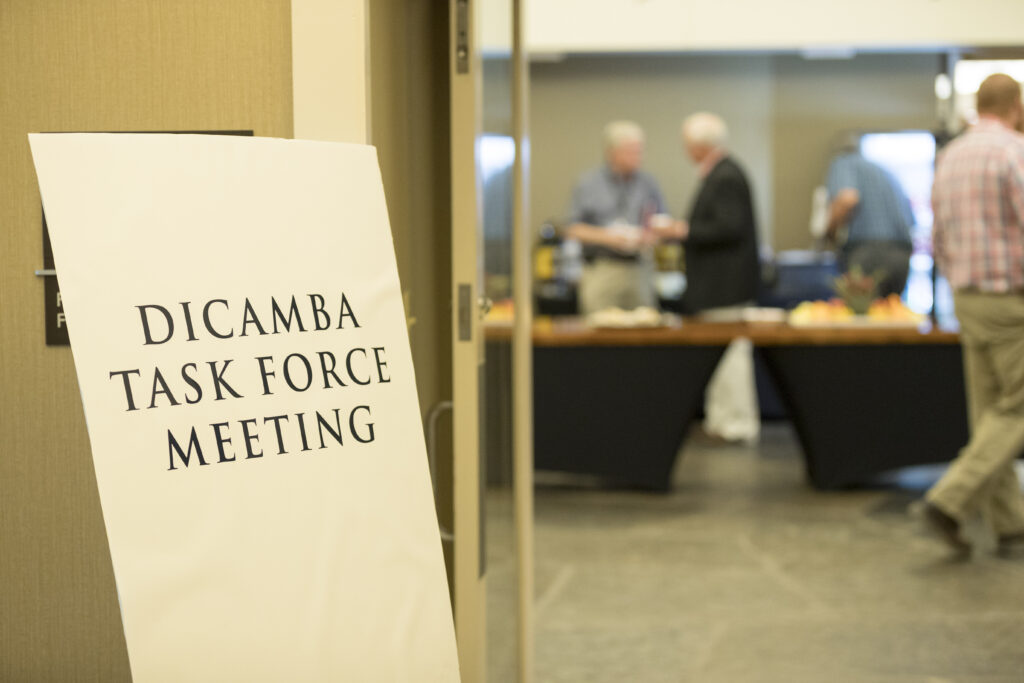
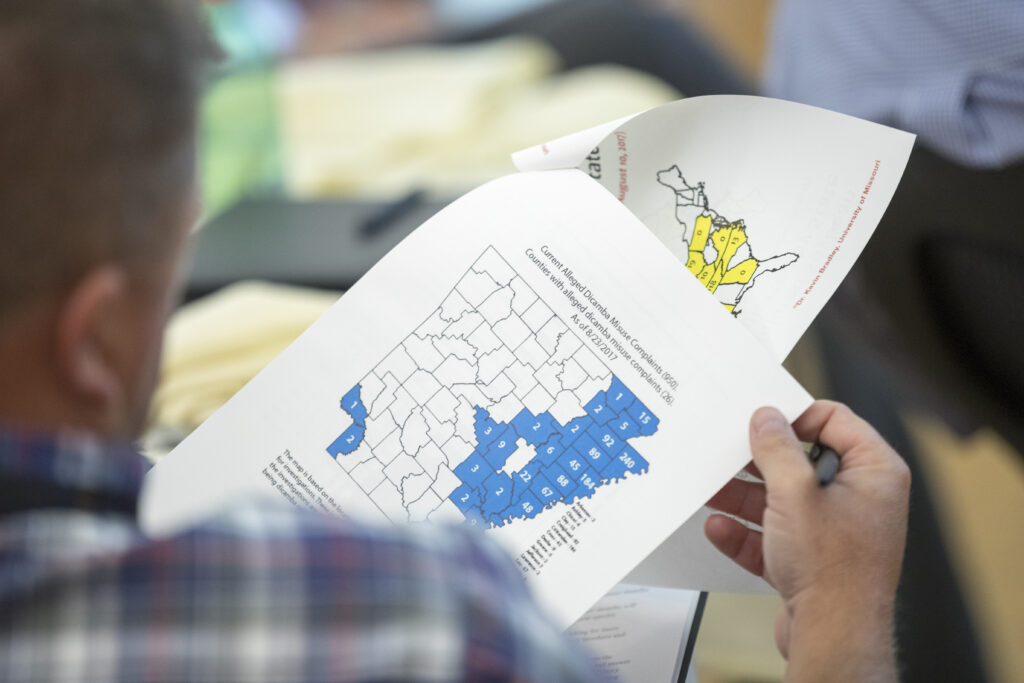
In 2017, the Arkansas State Plant Board established a task force to investigate widespread crop damage associated with dicamba drift. Farmers, scientists, and industry leaders came together to understand the herbicide’s volatility, the risks to nonresistant crops, and the economic pressure it placed on growers across the state.
To help bridge social and political divides, the Institute partnered with the Arkansas Department of Agriculture to lead a two-day public dialogue featuring facilitated discussions.
The Institute provided a neutral space to build understanding and shape policy recommendations grounded in science and shared values.
A Model for Future Work
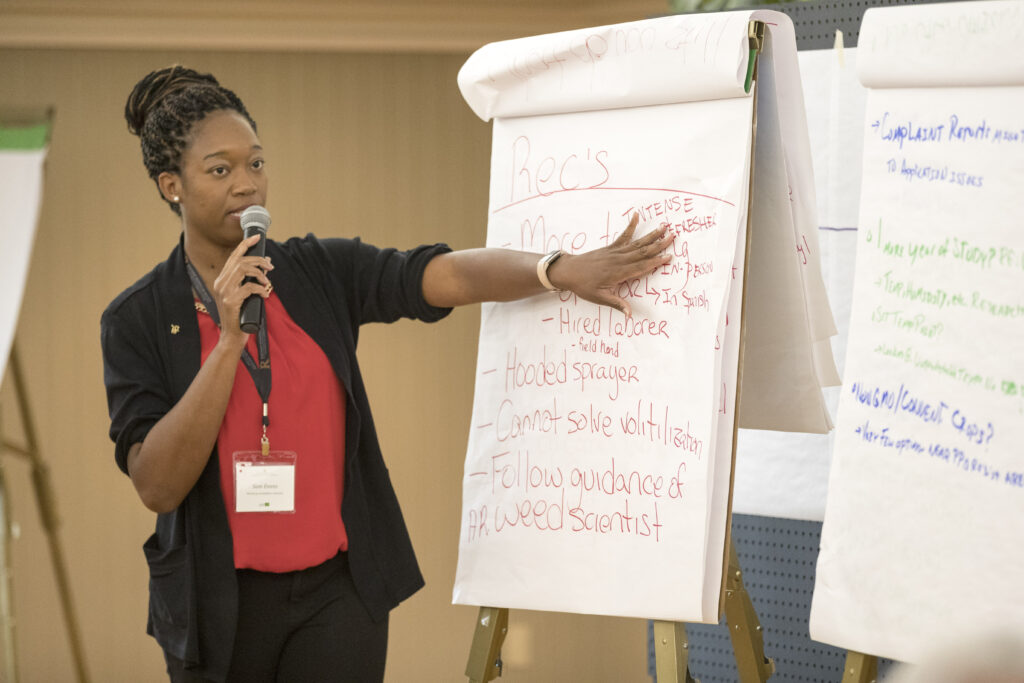
When dicamba discussions landed on the Institute’s doorstep, it wasn’t just another issue — it was a crucible. As Facilitation Services Director Payton Christenberry recalls, “Dicamba was kind of the first time we took on the mantle of facilitation. It was very transformative.”
Though facilitation had been used on our campus before, this was the first time the Institute led such a high-stakes, emotionally charged convening.
Institute Executive Director/CEO Janet Harris explained that the Secretary of Agriculture, Wes Ward, and then-Gov. Asa Hutchinson appointed a task force with a wide range of perspectives — from farmers who relied on dicamba to those whose crops were harmed by it, as well as industry representatives and scientists.
Farmers were divided over the use of the herbicide, with accusations of crop damage adding to the tension.
“We made a recommendation through the Secretary of Agriculture to make sure that the perspectives around the issue were pretty evenly represented,” Harris said.
Trusting the Process
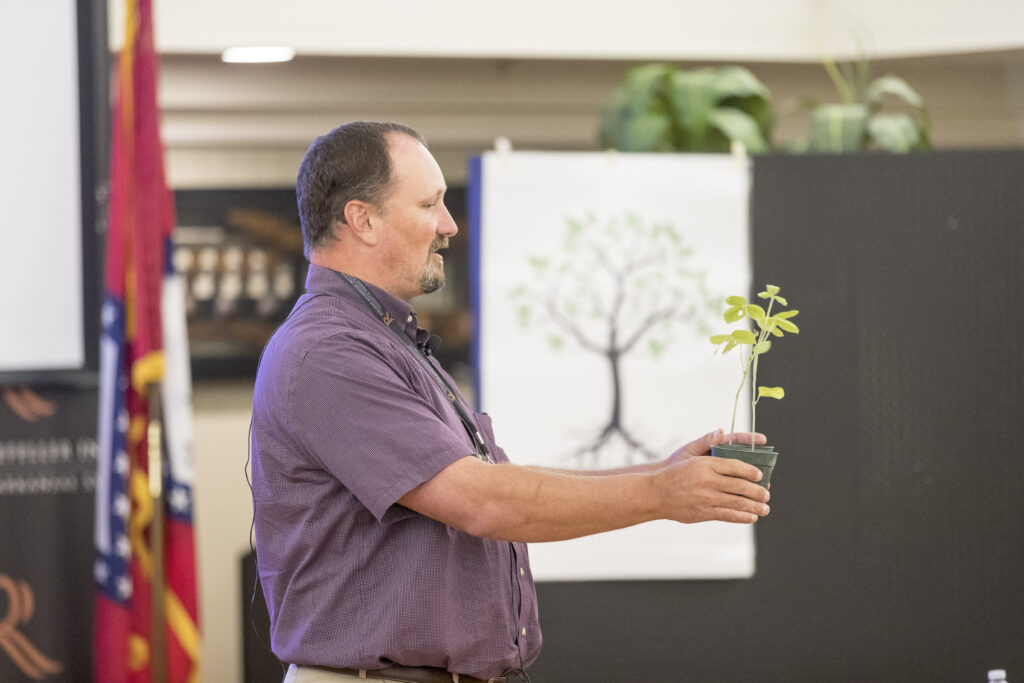
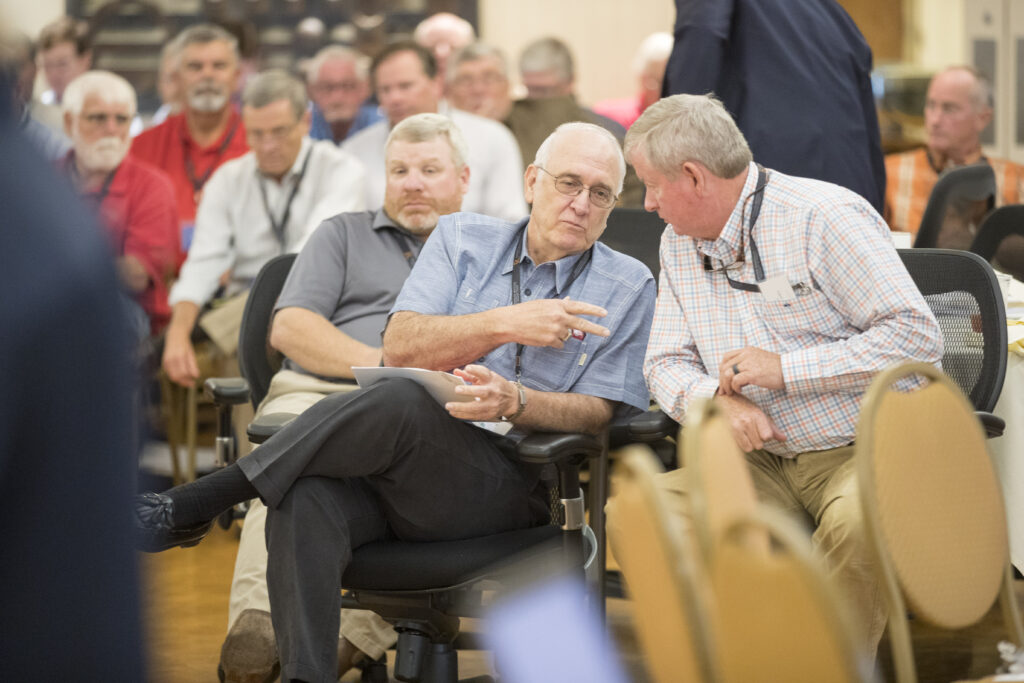
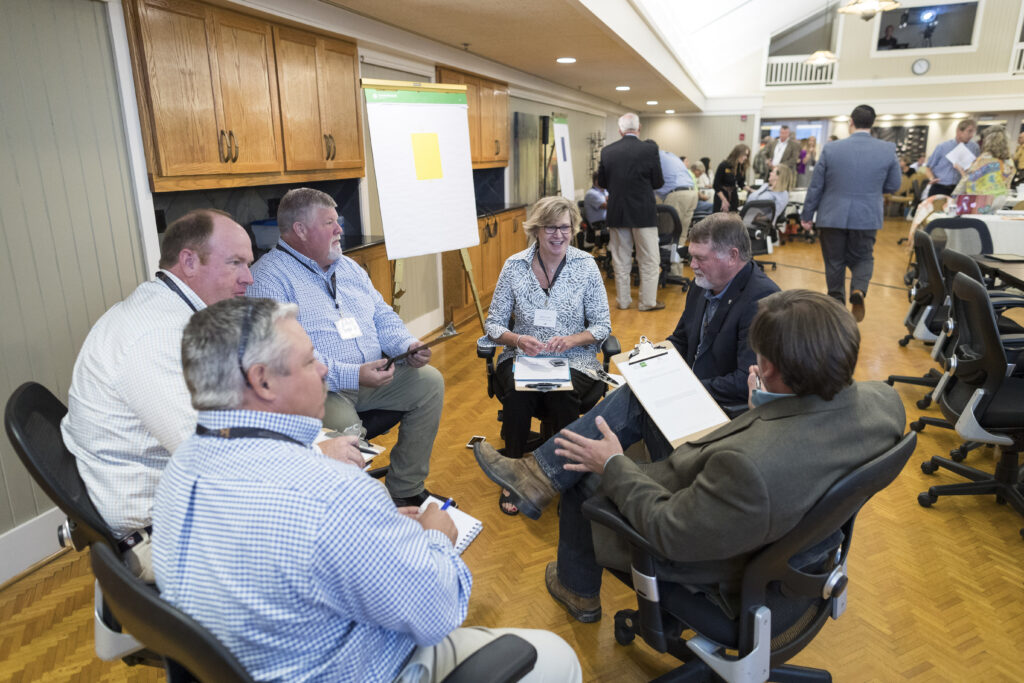
Initially, our team planned to support an external facilitator. But when that person had to leave due to a family emergency, the Institute stepped up. “Suddenly we were the main facilitators…it really was kind of suddenly this trial by fire,” Christenberry said.
What followed was a deep dive into reflective structured dialogue, a method that helped participants see each other not as adversaries, but as neighbors with shared values.
Instead of a rushed vote, the team pushed for a two-day process.
“If you want to do this right, you need to give it time,” Christenberry emphasized.
The Institute’s approach was rooted in respectful dialogue and collaborative problem solving. Rather than allowing a quick vote, facilitators insisted on a structured process that encouraged participants to listen, reflect, and seek consensus.
This wasn’t easy. Many participants were skeptical, especially the idea of sitting in mixed groups with people who held opposing views. However, the Institute remained steadfast, believing that the only way forward was through understanding and shared decision-making.
The result led to a set of nuanced recommendations that most participants could agree on — proof that process matters.

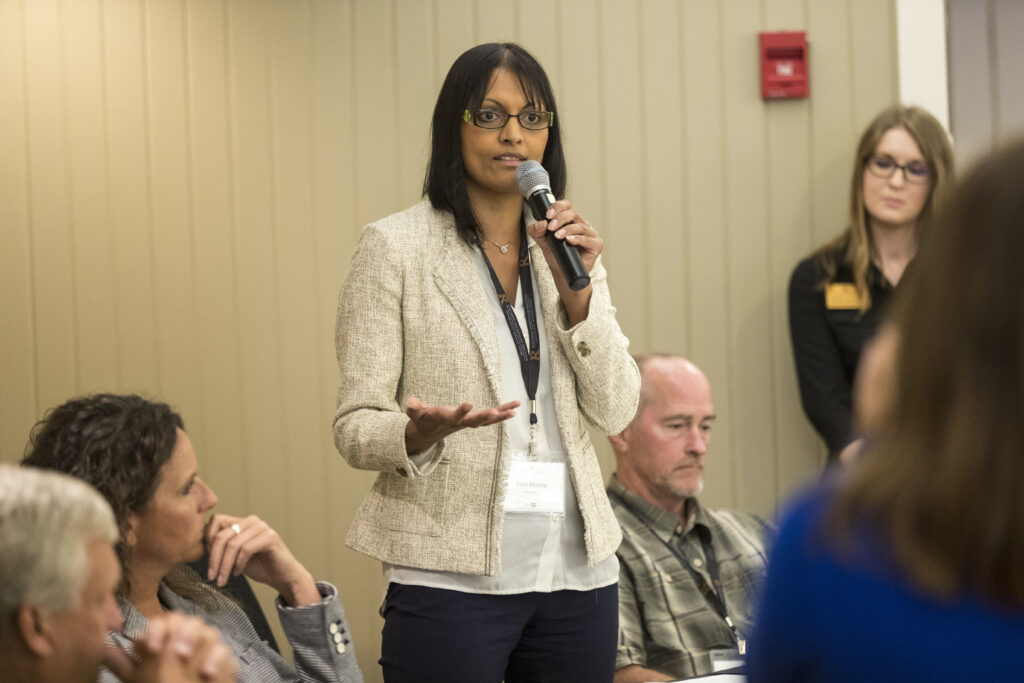
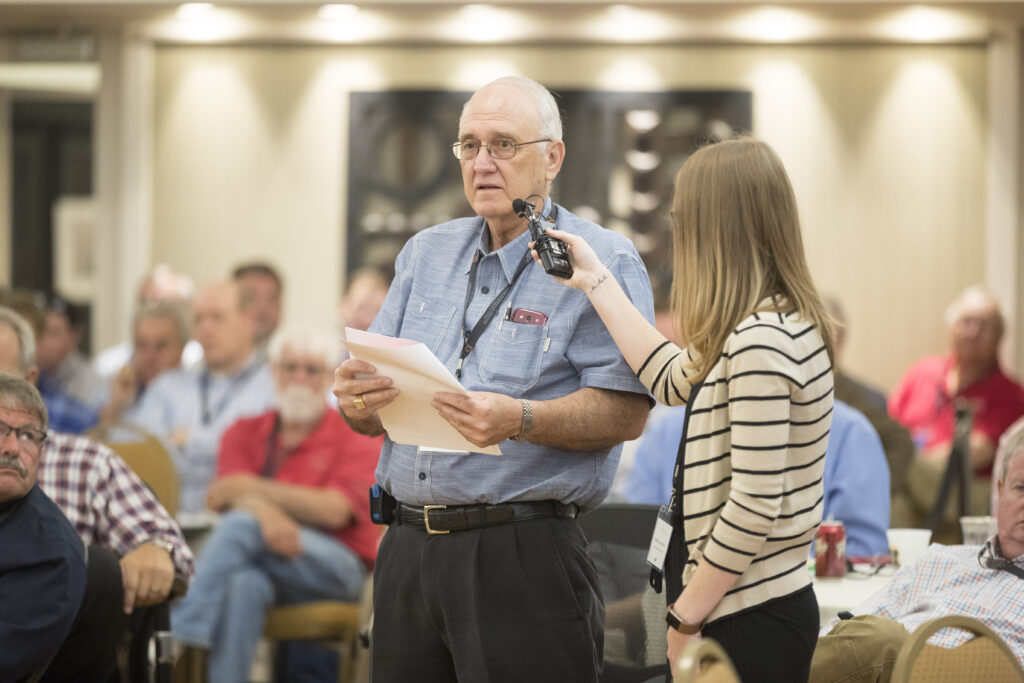
The task force recommended tighter restrictions, improved application practices, and additional research when dealing with dicamba. These are laid out in the 2017 Arkansas Dicamba Task Force Report.
This experience laid the groundwork for what would later be coined as the “people, place, process” approach.
“They do better work with us than if we were to go to them or to a boardroom somewhere or to the Ramada Inn ballroom,” Christenberry said. “Dicamba was kind of the prototype for that.”
The experience reinforced the importance of creating space for dialogue, even when it’s uncomfortable, and trusting that the process can lead to meaningful outcomes.
Legacy of Trust and Transformation
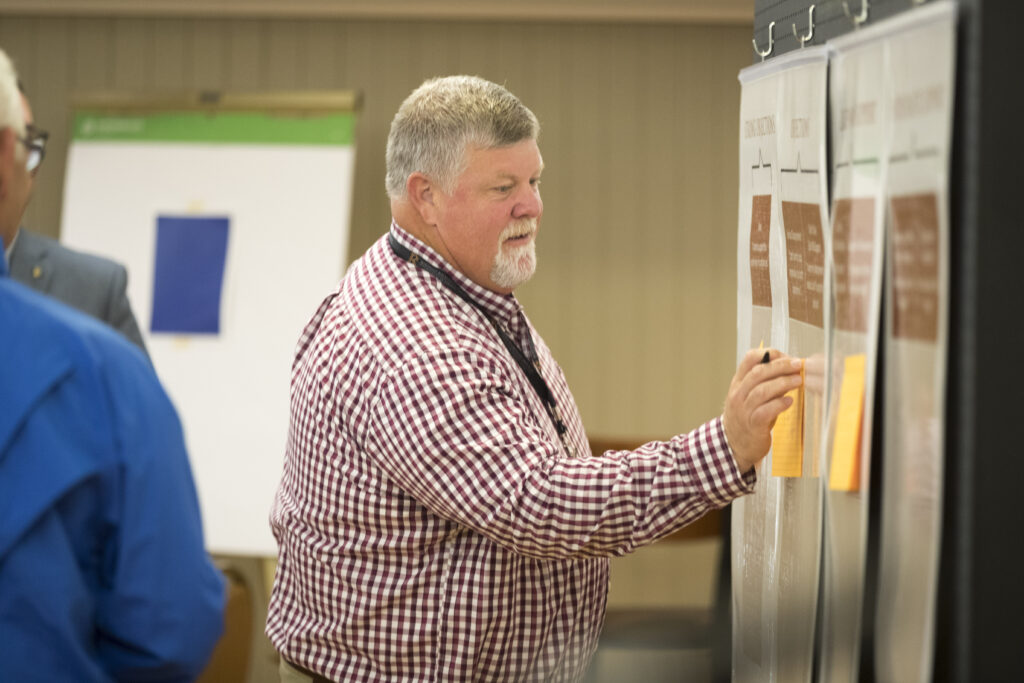
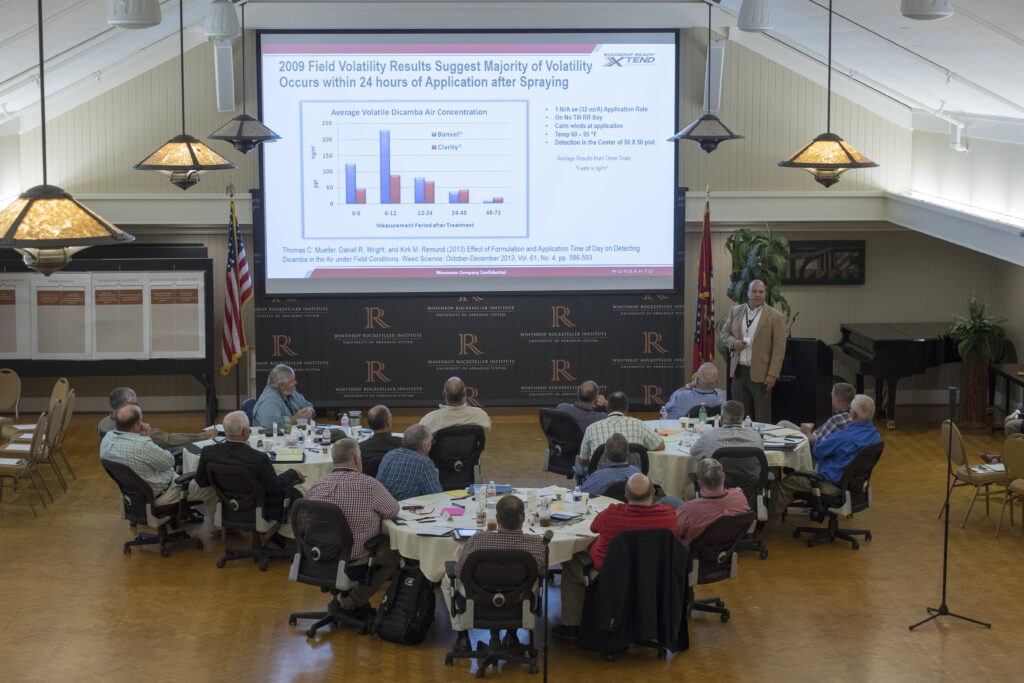
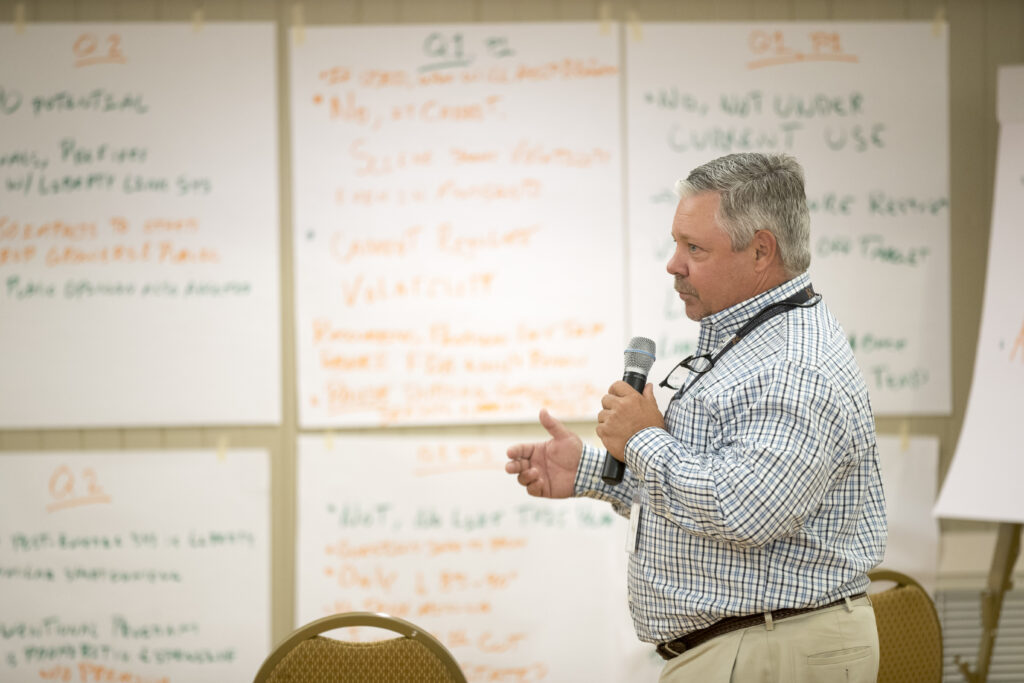
The dicamba convening was a moment that proved the power of bringing people together in a neutral space, guided by intentional methods and a commitment to collaboration.
“Facilitation… is a science and an art both… ours is very specific…rooted in the Rockefeller ethic,” Harris said.
At the Institute, we don’t just host meetings — we create environments where transformation is not only possible, but encouraged. As Christenberry put it:
“We’ve been accused of bringing people here and then trapping them in a web of hospitality… and I think that is very indicative of what we do.”
That “web” is intentional. It’s where trust is built, perspectives shift, and real solutions emerge.
Your team is at the heart of every successful facilitation